
Visiting Jantar Mantar in New Delhi, India
Jantar Mantar, which is literally translated as “instruments for measuring the harmony of the heavens” is a Unesco World Heritage site within the city of New Delhi India and is made up of a collection of several architectural astrology instruments. Essentially, it’s an astronomical observatory to chart and measure movements of the sun, moon, planet and stars. The first instrument was built in 1723 and the other instruments soon followed. There are a total of five of these observatories in India, with the others being located in Jaipur, Varanasi, Ujjain and Mathura.
Location, Hours and Cost of visiting Jantar Mantar in New Delhi, India
Jantar Mantar is located in the heart of New Delhi, India, close to Connaught Place (a popular spot for shopping and restaurants…also a great place for tourists to get scammed by touts, but that’s another post for another day. Connaught Place is my least favorite place in Delhi but again, that’s another topic for another day!). Depending on how you’re getting around Delhi, you can reach Jantar Mantar via Uber, auto rickshaw (tuk tuk), or the Metro (violet or yellow lines (Rajiv Chowk station or Patel Chowk station) will bring you with walking distance) or since it’s close to Connaught Place, you may be able to walk here from your hotel.
Hours:
10am – 6pm daily
Cost:
- 200 Indian Rupees for tourists.
- 15 Indian Rupees for Indian Nationals.
- No photography fee (many tourist sites in India require an additional fee if you want to take photos. It’s usually very cheap).
Visiting Jantar Mantar
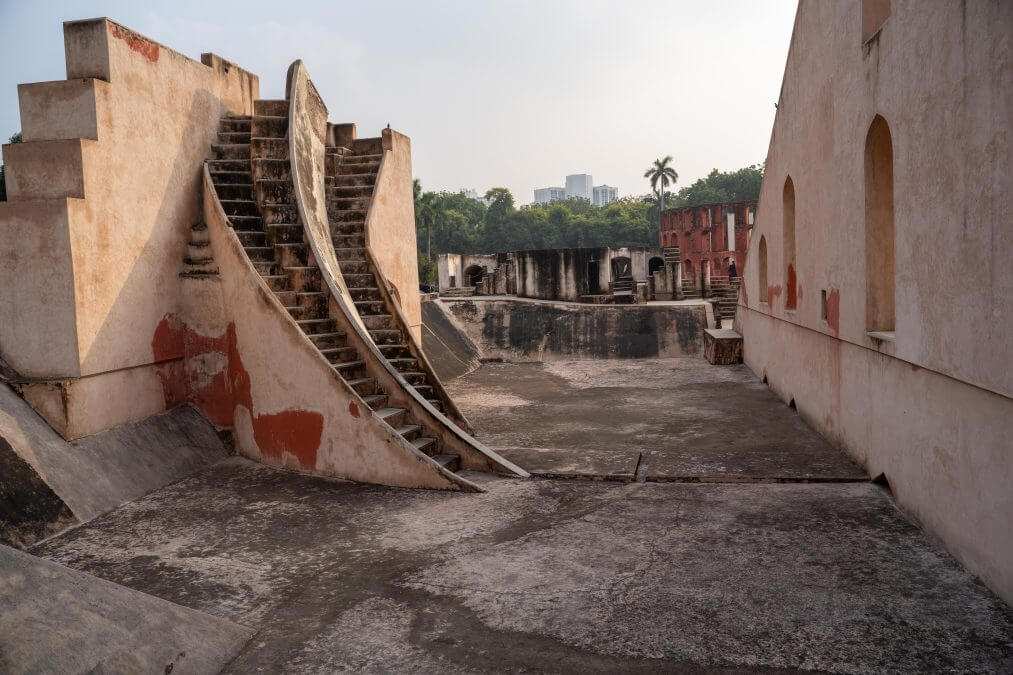
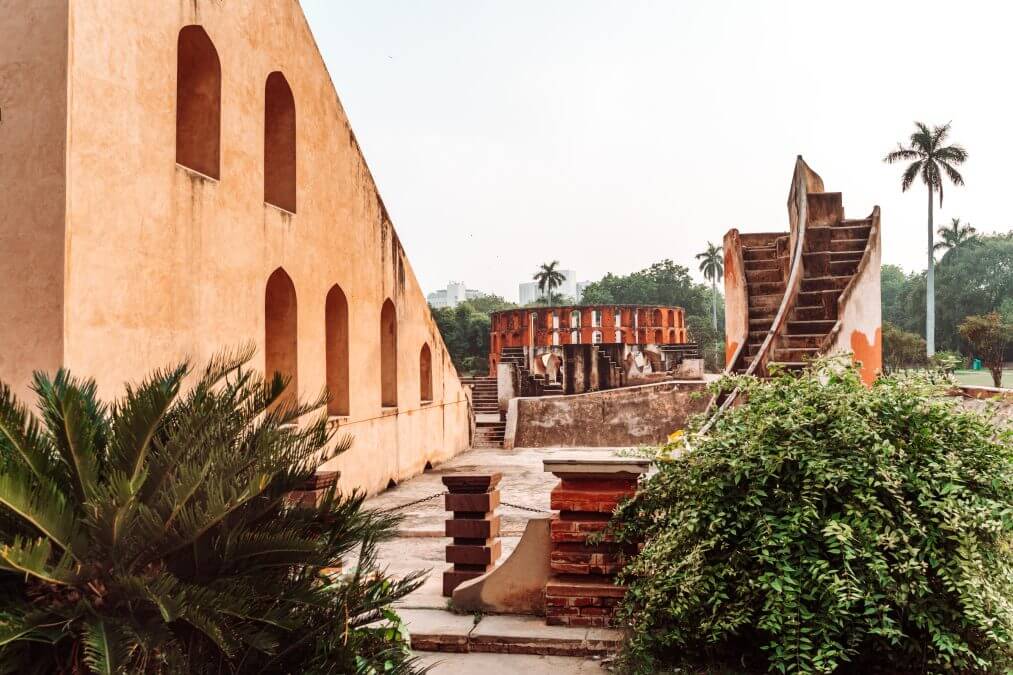
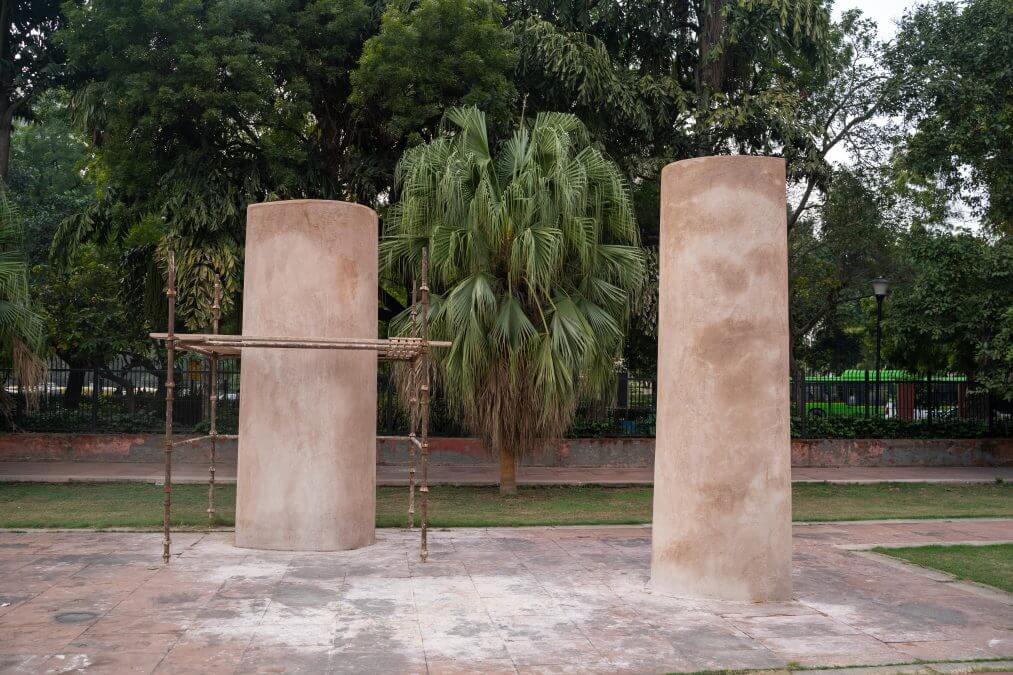
After paying your entry fee, you’ll be able to head into the grounds. Delhi’s Jantar Mantar is quite small and for being a Unesco World Heritage site, I thought it wasn’t very well-maintained – the astronomical structures were very faded and crumbling and the surrounding grounds could use a little TLC. These instruments were damaged in the late 1700s, with lots of marble being removed. Despite restoration efforts starting in 1852, the structures still look pretty rough.
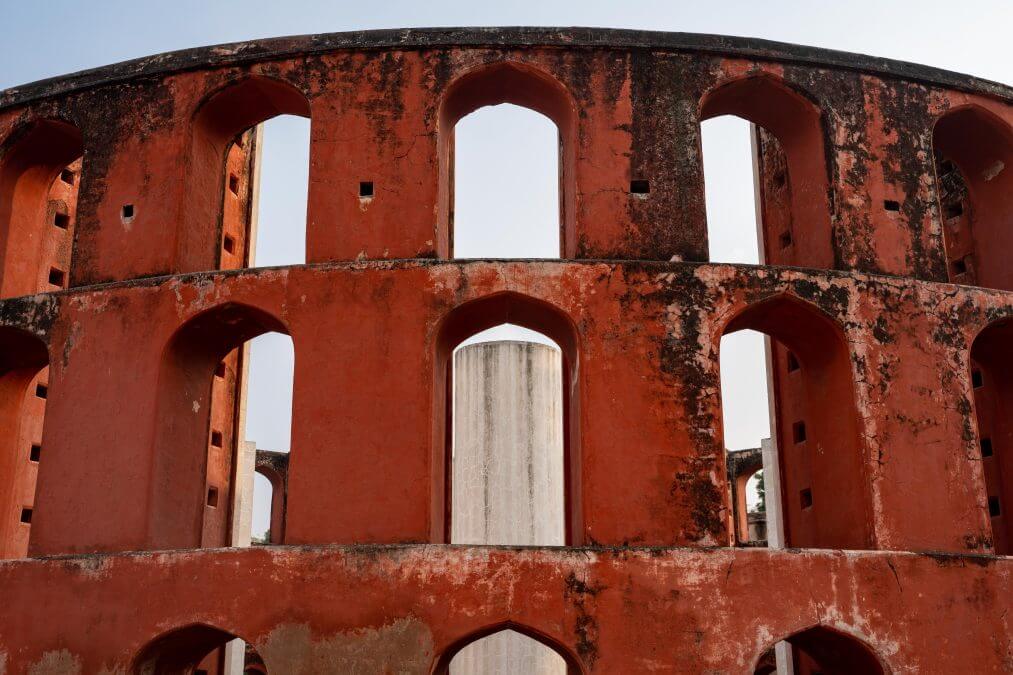
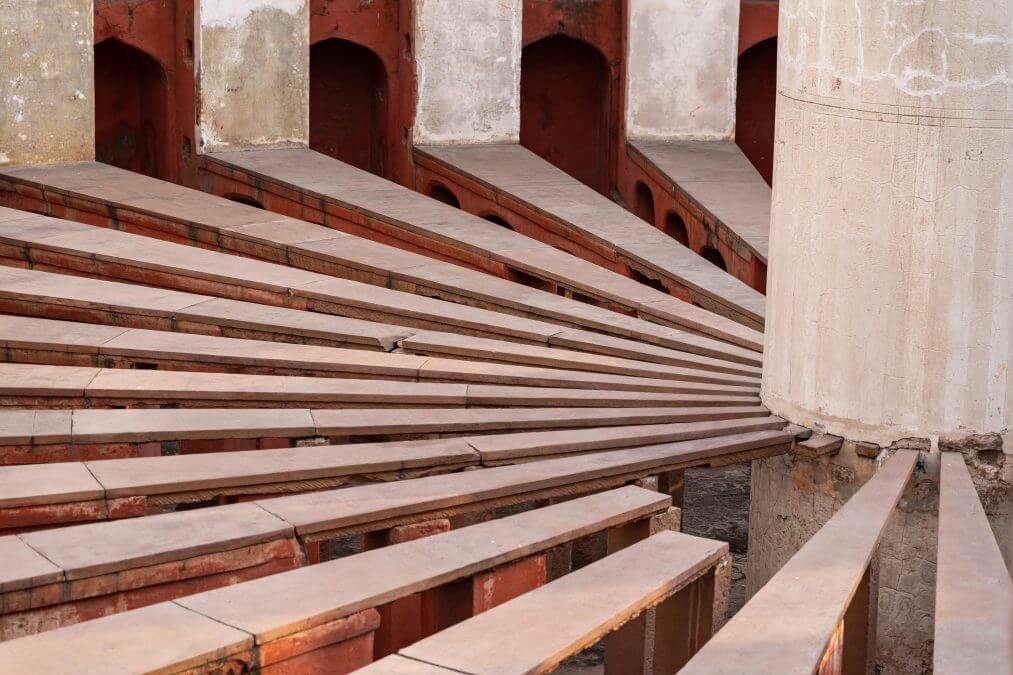
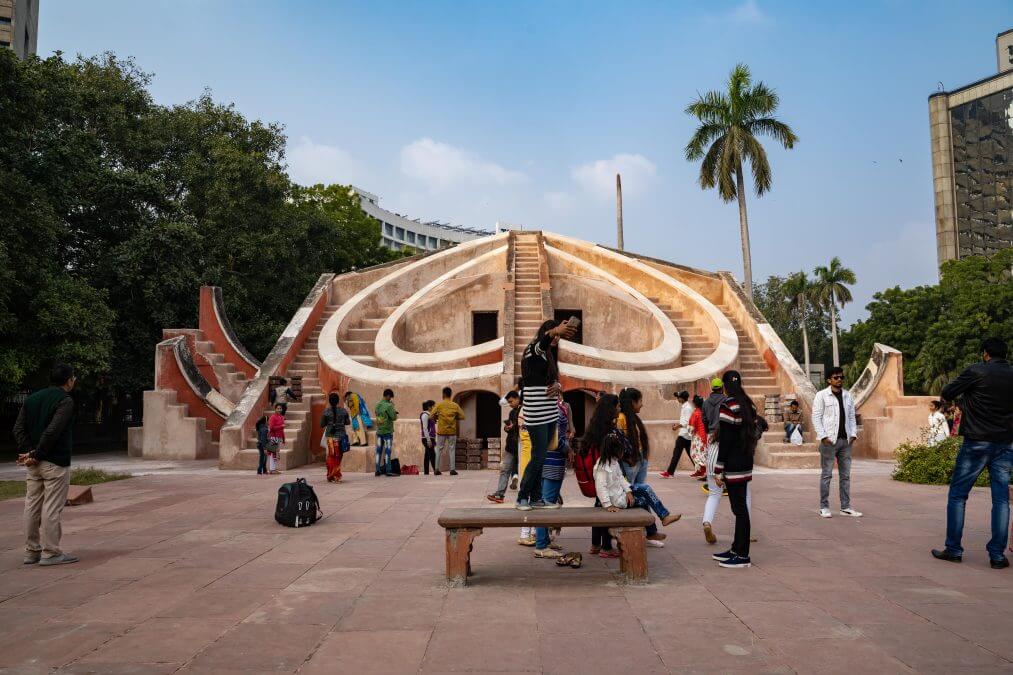
The best time to visit would be on a bright, sunny day, which, let’s be honest, doesn’t happen that often in Delhi. By “bright, sunny day” I mean clear blue sky! Air pollution is a major, major problem in Delhi – so even if the weather forecast says “mostly sunny”, the sky looks overcast and these instruments won’t cast harsh shadows. Your best bet would be to visit at the end of February through March, as this was the clearest, sunniest, most comfortable time of the year, in my experience of living in Delhi. When the sun is shining bright without all the air particles, you’ll be able to see how the instruments work. I visited Jantar Mantar in December, which is one of the worst months for air pollution.
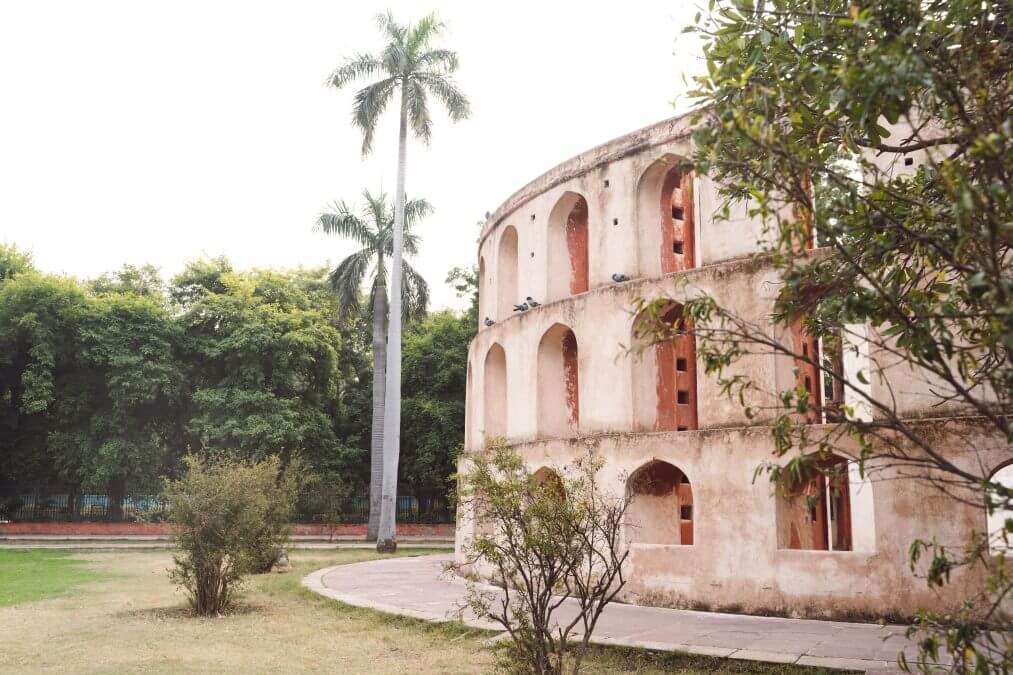
A lot of locals come here and use this site as a park, so you will see children playing and families enjoying some outdoor time together.
Frankly, I didn’t find Jantar Mantar all that compelling, if I’m being honest, but I’m also not interested in astrology. The signs by the instruments aren’t very detailed and simply don’t give a good explanation of what you’re looking at or how it works. This maybe will take you 30 minutes, at most, to visit.
If you’re short on time for your visit to Delhi, I’d definitely recommend skipping this. I have heard Jaipur’s Jantar Mantar is larger and better maintained, so if you’re doing the “Golden Circle” India trip and you really want to see an old observatory, visit it in Jaipur instead.
Jantar Mantar in Delhi, India – Final Thoughts
Pros:
- Small site – it won’t take you long to visit
- The instruments are architecturally interesting to look at
Cons
- Crowded on weekends
- Not very well-maintained
- Need better interpretive signs to really understand how the heck these instruments work!




One Comment