Dandi March Statue (Salt March) – New Delhi, India
If you’re interested in the history of India / Gandhi, this lovely statue and memorial commemorating the Salt March (or Dandi March) of 1930 in New Delhi, India is a quick stop to make while you’re in India’s capitol city.
What is the Dandi March Statue?
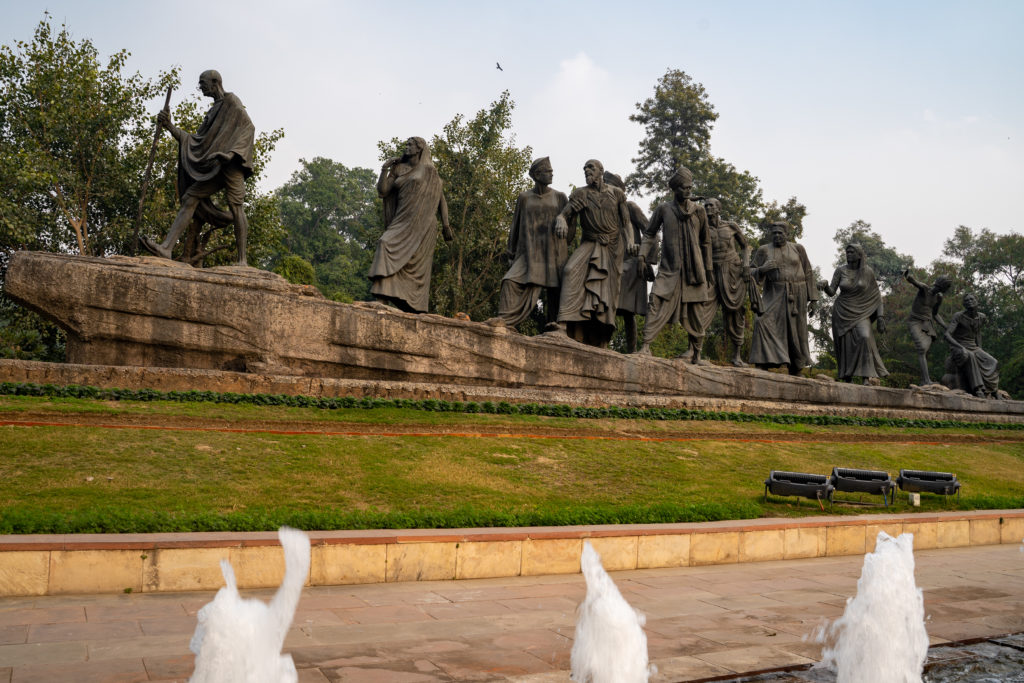
The Salt March took place from March to April 1930, as an act of civil disobedience as a non-violent protest against British rule. Indians were forbidden to sell or collect salt, a staple in their food and instead, were forced to buy it from the British at a hefty cost. The Salt March was led by Gandi – his goal was to march all the way to the Arabian sea to make their own salt from saltwater. Over 60,000 people were arrested, including Gandi during these protests.
Dandi March Statue Location
There isn’t any parking near this statue, but this is India – your driver will be able to stay here long enough for you to see this statue, snap a few photos and hop back in your car or auto-rickshaw.
The Dandi March statue was created by sculptor Devi Prasad Roy Chowdhury, and it features Gandhi and 10 Indian followers – all of different religions and castes – a woman, a child, Muslim, Hindu, Sikh, and Christian, and an older gentleman – all following as Gandi marches on.
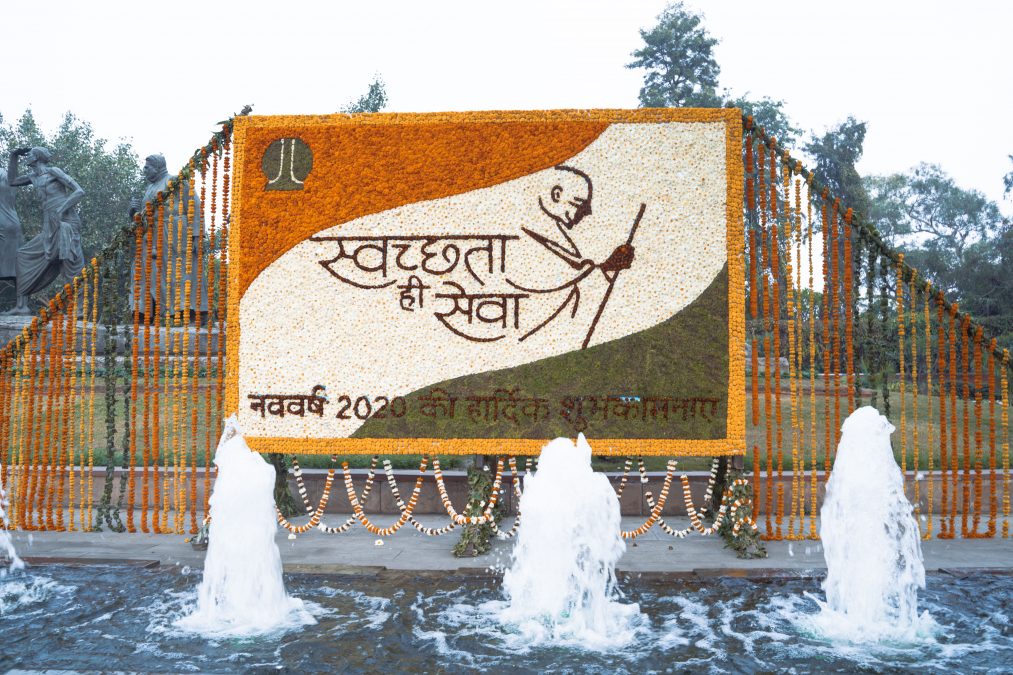
This is truly a beautiful state – you may find at times it’s decorated with marigolds (as it was when I saw the statue). I’m not sure what this sign says, but it’s a very beautiful display.
Viewing the Salt March statue takes only a few minutes, and it’s close to other Delhi attractions (the President’s Home, India Gate, Indira Gandi Memorial Museum), so having your driver stop by here won’t be too far out of your way.
Have you seen the Dandi March Statue? I’d love to hear your comments!